

Introduction
For centuries, the economy and survival of the UAE’s coastal communities were inextricably linked to the sea, and at the heart of this maritime world was the dhow. The construction of these elegant wooden vessels was not an industry but an art form, mastered by the shipwrights known as the Al Kheid. Working without detailed blueprints, these craftsmen used inherited knowledge, a keen eye, and simple tools to build the ships that carried pearl divers, traders, and fishermen. In an age of fiberglass and steel, the Al Kheid are a vanishing breed, but a dedicated effort is underway to preserve their irreplaceable skills, ensuring that the soul of the UAE’s seafaring heritage remains afloat.
The Warsha: The Shipyard as a Classroom
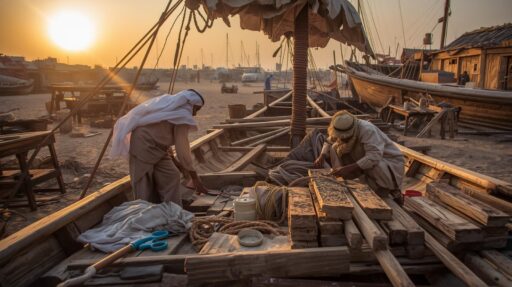
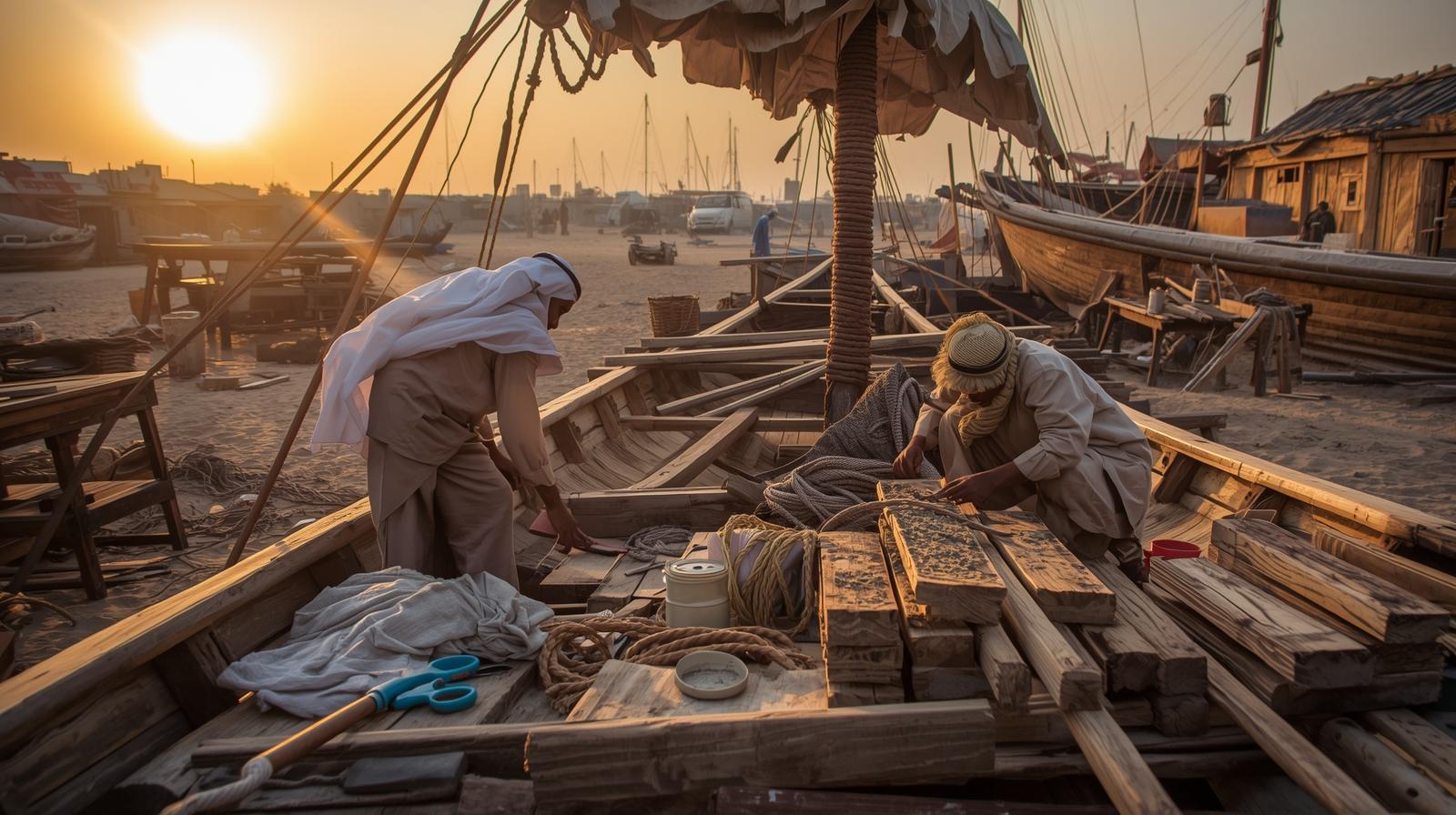
The Al Kheid’s workshop was the warsha (shipyard), a bustling, open-air space on the beach, filled with the scent of wood shavings, tar, and salt air. This was a living classroom where knowledge was transmitted orally and kinesthetically from master to apprentice. A young boy would start by performing simple tasks—mixing tar, fetching tools, holding planks in place—while absorbing the rhythms and rituals of the craft. It could take a decade or more under the watchful eye of a master to learn the secrets of selecting wood, shaping the hull, and the precise mathematics of ensuring a vessel was both seaworthy and fast.
The Anatomy of a Dhow: Materials and Techniques
The primary material was wood, with teak imported from India being the most prized for its durability and resistance to rot. The construction process was a marvel of engineering. The Al Kheid began by laying the keel, the backbone of the ship. The planks for the hull were then shaped using hand adzes and fixed to the frame. The most remarkable technique, now exceedingly rare, was the “sewing” of the planks. Holes were drilled along the edges of the planks, and they were stitched together using strong cord made from coconut husk (coir), which had been soaked in oil to make it waterproof. This method created a hull that was flexible and resilient, better able to withstand the shock of hitting coral reefs than a rigid, nailed hull.
A Fleet of Forms: The Different Types of Dhows
The term “dhow” is a general one, covering a variety of vessel types, each designed for a specific purpose. The Al Kheid mastered them all:
- Al Sambuk: The most common pearling dhow, with a distinctive, high, pointed stern.
- Al Boom: A large ocean-going trading vessel with a tall, lateen sail.
- Al Baghlah: A large, often ornately carved vessel used for trade and as a royal yacht.
- Al Jalboot: A smaller, motorized fishing and trading vessel that became common in the 20th century.
Each type had its own specific proportions, sail plan, and construction nuances, knowledge of which was the hallmark of a true master shipwright.
The Modern Revival: From Commerce to Culture
The decline of the pearling industry and the rise of engine-powered, steel-hulled ships in the mid-20th century rendered the Al Kheid’s trade commercially obsolete. For decades, it seemed the skill would die with the last masters. However, a revival is now underway, driven by cultural pride rather than economic necessity. The Al Kheid are now recognized as Living Human Treasures. They are employed by museums and cultural foundations to build and restore dhows for heritage races, like the prestigious Al Gaffal race, and for display. Their work is no longer about commerce, but about preserving a tangible link to the maritime soul of the nation.
Conclusion: Guardians of a Seafaring Soul
The Al Kheid are more than just carpenters; they are the guardians of a vast repository of intangible cultural heritage. In the curve of a hull they shape and the stitch of a coir rope, they hold the memory of the pearl divers, the merchants, and the fishermen who built the coastal Emirates. The sight of a newly built traditional dhow, its sails catching the wind, is a powerful symbol of this enduring connection. By supporting the last Al Kheid, the UAE is not just preserving boat-building skills; it is ensuring that the spirit of adventure, trade, and resilience that carried its people for centuries continues to inspire generations to come.