

Introduction
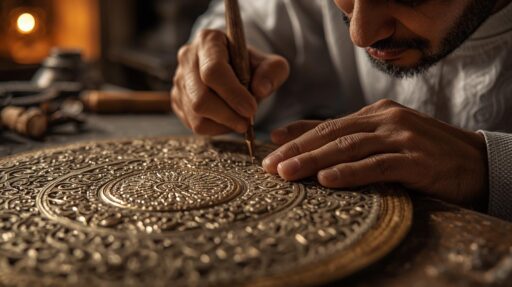
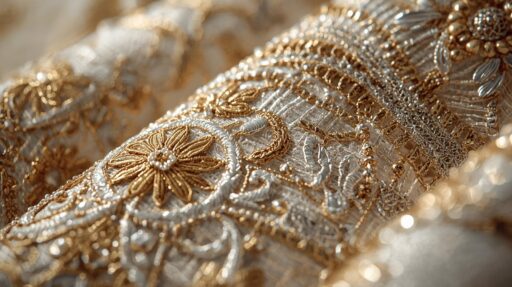
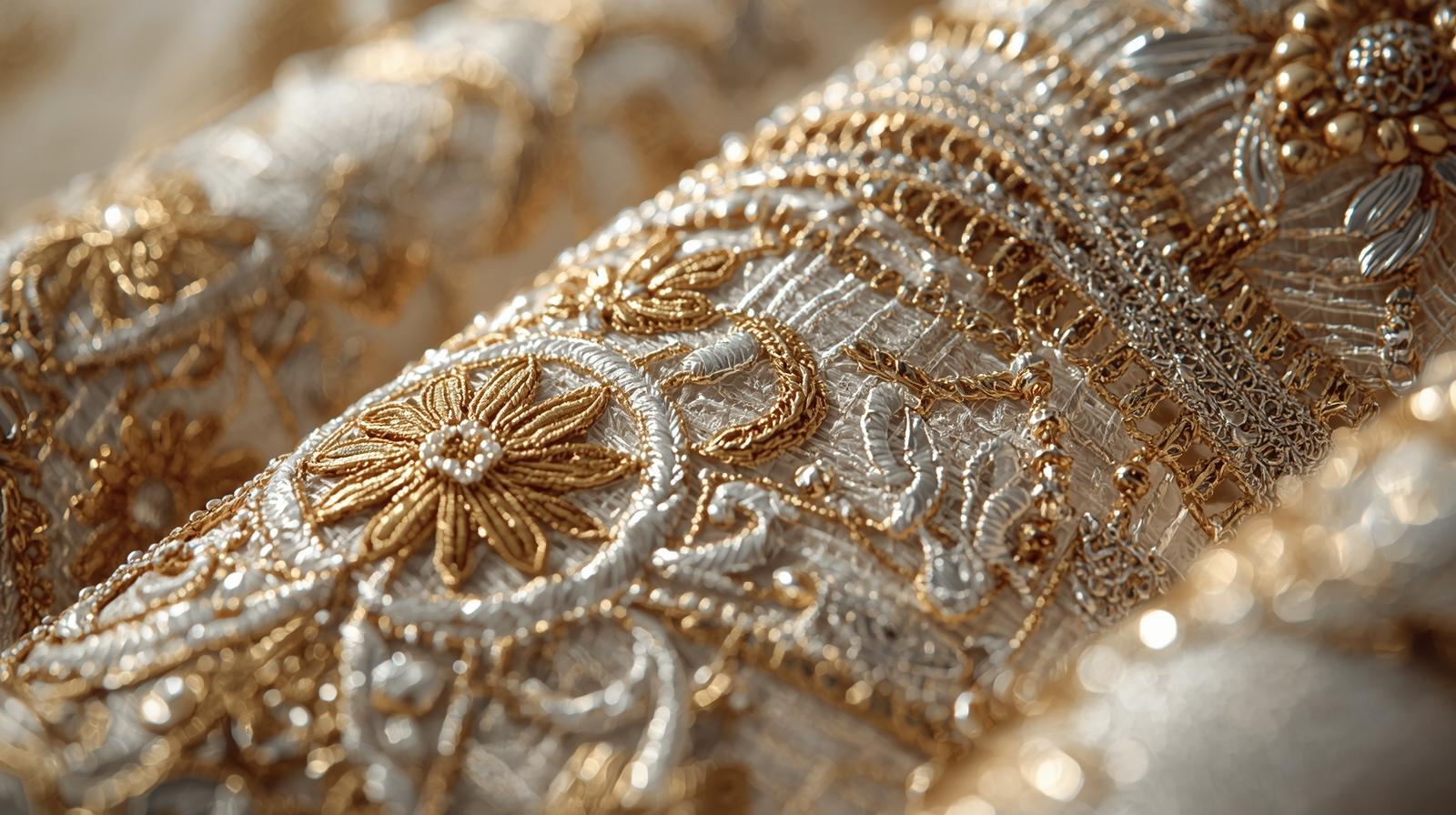
While the flowing black abaya is the most visible element of traditional Emirati women’s dress, it is often the delicate, intricate embroidery known as Talli that holds the greatest cultural significance and artistry. Talli is the delicate, metallic-thread embroidery that trims the cuffs, necklines, and hems of traditional dresses (thobes) and headdresses. More than mere decoration, Talli is a cherished handicraft, a vehicle for personal expression, and a symbol of feminine skill that has been passed down from mother to daughter for generations. This intricate art form represents the hidden, detailed beauty that lies beneath the surface of Emirati culture.
The Tools of the Trade: The Kajouja and the Mkhadda
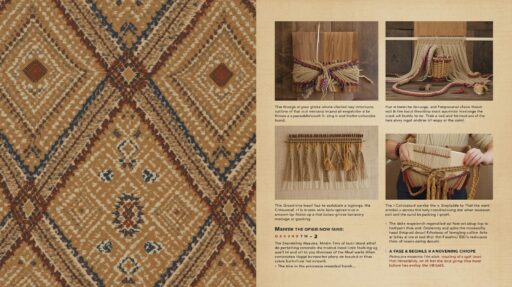
The creation of Talli requires specialized tools and a steady hand. The primary tool is the Kajouja, a small, cylindrical pillow that rests on the embroiderer’s lap. The fabric to be embroidered is pinned taut to this pillow, providing a stable working surface. The threads are then woven and braided using a set of small, handheld wooden spools called Mkhadda (or yatama). The embroiderer deftly manipulates several spools at once, twisting and braiding the threads around stationary pins stuck into the Kajouja to create the complex, lace-like patterns. The process is a mesmerizing dance of the fingers, requiring immense concentration and muscle memory.
A Symphony of Threads: Materials and Colors
Traditional Talli threads were made from fine cotton or silk, often intertwined with real silver or gold thread (zari), which gave the embroidery its characteristic shimmer. Today, synthetic metallic threads are more common, but the effect remains dazzling. The color palette, while often centered on gold and silver, can be vibrant. One can find Talli in shades of red, green, blue, and pink, allowing the wearer to express her personal taste. The most common base colors are:
- Gold: For celebrations and weddings, symbolizing prosperity and joy.
- Silver: For everyday wear, elegant and understated.
- White: Often used on dresses for religious occasions like Eid.
Patterns and Symbolism: A Language of Braids
Like Sadu, Talli patterns are geometric and symbolic, though on a much finer scale. The patterns have evocative names, often derived from nature or everyday objects. Common motifs include:
- Um Al Khous: “Mother of Dates,” a pattern resembling the texture of a date basket.
- Al Rasha: “The Feather,” a light, airy design.
- Baz Al Bannat: “The Girls’ Falcon,” a complex and highly prized pattern.
- Dana Al Naqsh: “The Pearl of the Pattern,” a central, prominent motif.
Mastering these patterns takes years, and a woman’s skill in Talli was historically a marker of her patience, dexterity, and readiness for marriage.
A Craft in Modern Times: Preservation and Innovation
In an era of mass production, the knowledge of hand-stitched Talli is a precious and endangered skill. Recognizing this, cultural institutions and community groups have established workshops to teach the craft to a new generation. Furthermore, contemporary Emirati designers are innovating with Talli, incorporating it into modern abaya designs, handbags, and even footwear, ensuring its relevance. While machine-made Talli trim is now widely available, the handcrafted version remains the most valued, a testament to the hours of labor and love embedded in every stitch. It is a tangible heirloom, a piece of living heritage that connects Emirati women to their mothers and grandmothers.
Conclusion: The Delicate Thread of Heritage
Talli embroidery is the subtle poetry of Emirati craftsmanship. It may not be as bold as Sadu, but its delicacy speaks volumes about the values of patience, precision, and understated elegance. In the swift movement of a woman’s hand, the flash of golden thread at her cuff is more than an accessory; it is a declaration of identity. It is a silent, beautiful language that tells a story of lineage, skill, and cultural continuity. As long as the Kajouja is passed down and the Mkhadda are set in motion, the intricate art of Talli will continue to adorn Emirati women, weaving a delicate but unbreakable thread between the past and the future.