

Introduction
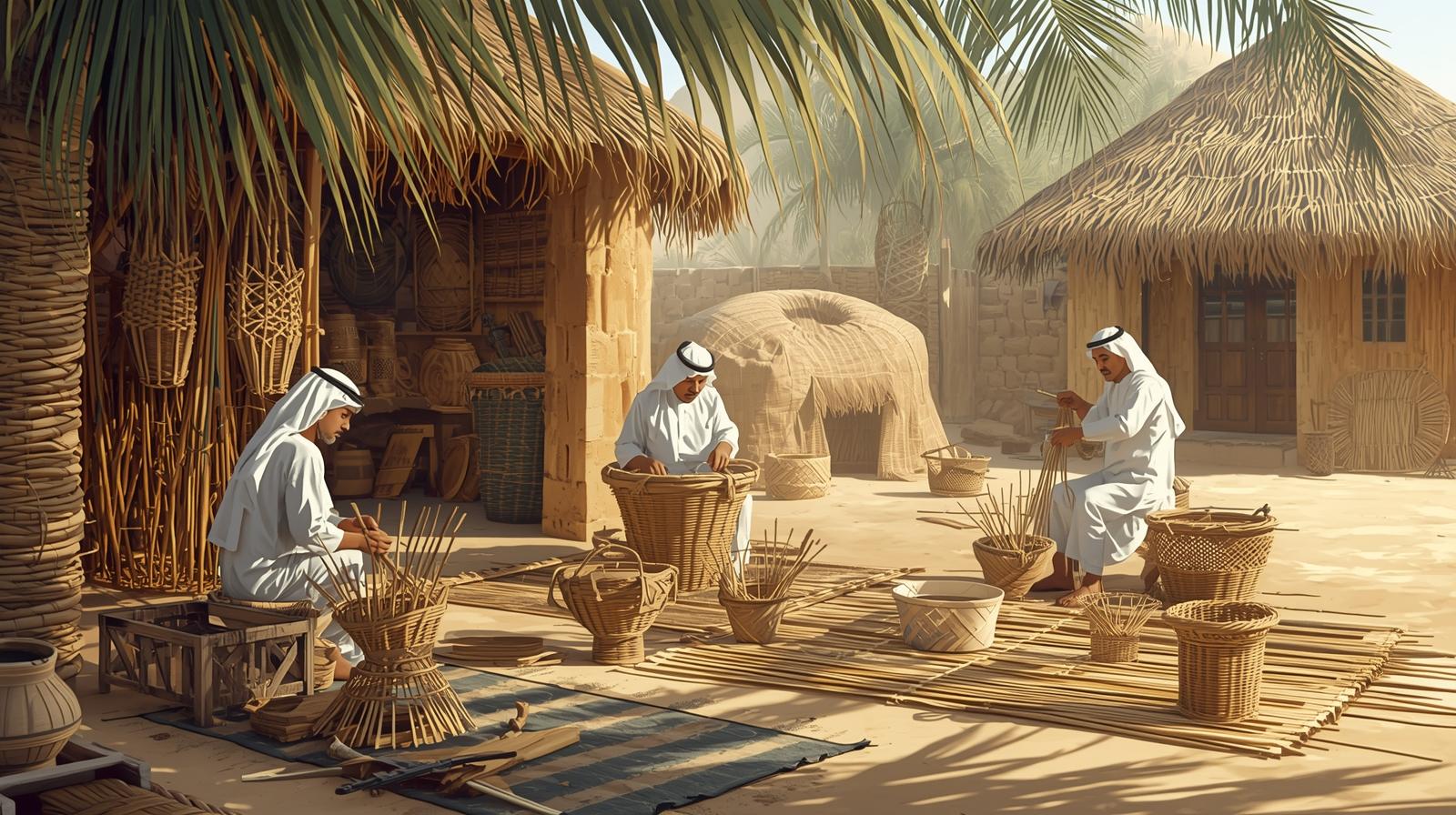
In the pre-oil UAE, the date palm (Phoenix dactylifera) was rightly known as the “tree of life.” Every part of this resilient tree was used, and perhaps the most versatile of all were its fronds, known in Arabic as Khoos. The craft of weaving Khoos into functional objects was a cornerstone of daily life, essential for survival, trade, and domestic comfort. From the walls of houses to the mats on the floor and the baskets carried to market, the art of Khoos weaving exemplified the Emirati principle of zero waste and a deep, sustainable harmony with the local environment.
The Harvest and Preparation: From Tree to Thread
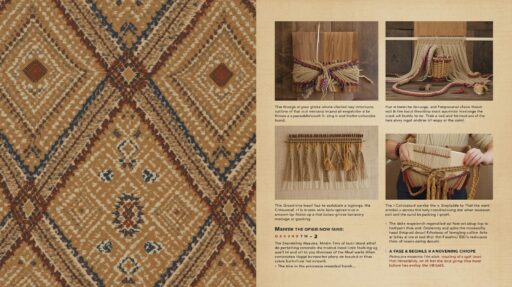
The process began with the harvest. The tough, central spine of the palm frond (areesh) was used for the structural framework of houses and fences. The individual leaflets were then carefully separated and prepared for weaving. To make them pliable, they were often soaked in water. For fine work, the leaflets were split lengthwise into even thinner strips. The natural color of the fronds was a pale cream or beige, but weavers also created patterns by dyeing some of the fronds, using natural pigments to produce simple stripes or geometric designs. The prepared fronds were then woven while still damp, allowing them to be shaped and twisted.
The Arish: Architecture from the Palm
The most significant application of Khoos was in the construction of the traditional summer house, known as the Arish. These houses were perfectly adapted to the climate. The walls and roofs, woven from palm fronds, were excellent insulators, keeping the interior cool during the blistering summer heat. They were also porous, allowing breezes to filter through. Building an Arish was a community effort, with families and neighbors coming together to erect the structure, which typically had a framework of palm trunks and walls of tightly woven Khoos. The Arish represented a mobile, sustainable, and highly effective form of architecture that dominated the coastal landscape for centuries.
A Universe of Utilitarian Objects
Beyond architecture, Khoos was woven into a vast array of everyday items, each with a specific name and purpose:
- Al Khoos (Mats): Used for sleeping, sitting, and as prayer mats.
- Al Makhaffa (Fans): Large hand-woven fans used to create a breeze and keep flies away.
- Al Safeef (Baskets): Used for carrying dates, fish, and other goods to the souq.
- Al Qafa’er (Storage Containers): Sturdy, lidded containers for storing clothing and valuables.
- Al Murbin (Cages): For keeping poultry and other small animals.
Every household possessed a wide range of these items, and the skill of weaving them was considered a basic life skill for both men and women.
The Craft Today: From Necessity to Artistry
With the advent of modern building materials and plastic consumer goods, the practical need for Khoos weaving dramatically declined. However, the craft has not disappeared; it has transformed. Today, it is a celebrated symbol of heritage and sustainability. Artisans continue to weave Khoos, creating beautiful baskets, decorative wall hangings, and modern home accessories that are highly prized by Emiratis and tourists alike. The craft is taught in schools and heritage centers to ensure its survival. The Arish has also seen a revival, not as a primary residence, but as a nostalgic garden shade or a feature in heritage villages, reminding people of a simpler, more self-sufficient time.
Conclusion: The Enduring Legacy of the Tree of Life
Khoos weaving is a powerful symbol of the UAE’s deep-rooted connection to its natural environment. It represents a time when creativity was driven by necessity, and sustainability was not a choice but a way of life. The woven texture of a Khoos mat, the distinctive scent of dried palm fronds, and the dappled light inside an Arish are sensory links to the nation’s past. As the UAE continues its journey into the future, the preservation of the Khoos craft ensures that the wisdom of the “tree of life” and the resourceful spirit of the people who mastered it will never be forgotten.