

Introduction
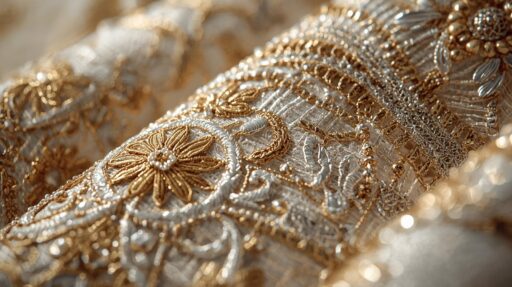
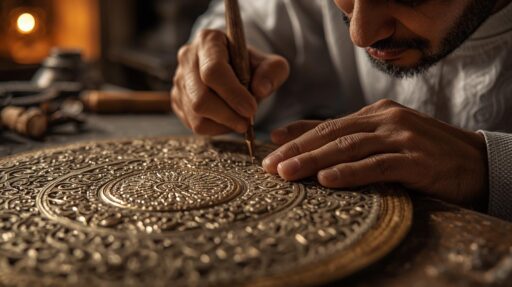
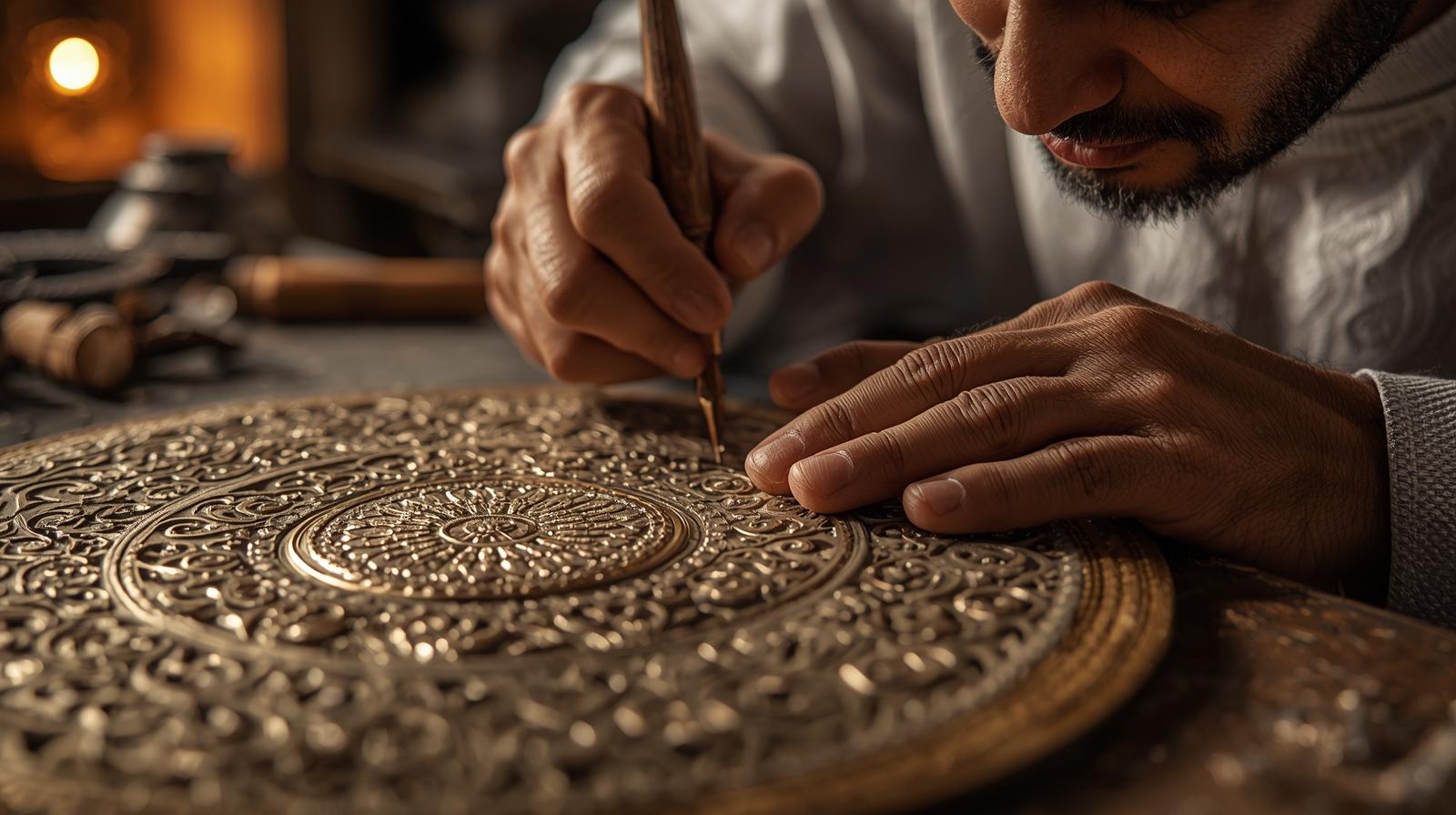
Amidst the soft textures of woven wool and palm fronds, the glint of metal has always held a special place in Emirati craftsmanship. Al Saff is the traditional art of metal embossing, a technique used to create intricate, raised patterns on precious metals like silver and gold. Primarily used for jewelry and the ornamentation of ceremonial objects, Al Saff work transformed simple metal into wearable wealth and symbols of status, identity, and spiritual protection. This demanding craft, practiced by specialized silversmiths, represents the pinnacle of precision and artistry in traditional Emirati material culture.
The Tools of the Trade: Hammers, Stamps, and Anvils
The workshop of a Saff craftsman (saffar) was a symphony of precise, repetitive sounds. His toolkit, though simple, was used with extraordinary skill. The primary tools were:
- The Anvil (Sindaan): A heavy, polished steel block on which the metal was placed.
- Hammers (Mataqil): A variety of hammers with different sized and shaped heads for striking and shaping.
- Stamps (Makachim): A collection of small, hardened steel rods, the tips of which were engraved with negative patterns—dots, lines, circles, and floral motifs. These were pressed onto the metal to create the decorative designs.
The process required immense control; a misplaced strike could ruin a piece of valuable metal that had taken days to prepare.
The Jewelry of Identity and Status
Traditional Emirati jewelry was not merely adornment; it was a woman’s personal bank account, a display of family wealth, and an amulet of protection. Al Saff work was featured on many iconic pieces:
- The Heavy Anklet (Al Khars): A massive, hollow silver anklet, often heavily embossed with geometric patterns, worn by married women.
- The Headdress (Al Tasa or Al Shelah): A ornate, metallic headpiece that was part of the traditional wedding costume, intricately worked with Saff patterns.
- Hair Accessories (Al Maqtab): Used to secure the headscarf, often featuring delicate embossing.
- Necklaces and Bracelets: Many featured embossed beads and pendants.
The quality and complexity of the Saff work directly reflected the wealth and social standing of the wearer.
Symbolism and Protection: More Than Just Beauty
The patterns used in Al Saff were deeply symbolic, often serving an apotropaic function—warding off evil. Common motifs included:
- The Hand of Fatima (Khamsa): A universal symbol of protection in the Islamic world.
- Fish Scales: Symbolizing abundance and connection to the sea.
- Geometric Patterns: Reflecting the same design principles found in Sadu weaving and Islamic architecture.
- Quranic Verses: Inscribed on pendants and amulets (hijabs) for spiritual safeguarding.
This layer of meaning made each piece of jewelry a deeply personal and powerful object.
The Evolution and Preservation of a Precision Craft
The craft of Al Saff faced a severe challenge in the late 20th century with the influx of mass-produced, machine-made jewelry from abroad. The intricate, hand-made pieces could not compete on price, and the number of master saffars dwindled. However, the current era of cultural preservation has sparked a renewed interest. Collectors and museums now seek out antique pieces with fine Saff work, and contemporary Emirati jewelers are studying the old techniques to create modern interpretations. While the craft may never return to its former commercial scale, it is now valued as a high art form, a testament to the patience and skill of the Emirati artisan.
Conclusion: The Enduring Impression of Metal
Al Saff represents the more permanent, enduring side of Emirati heritage. Unlike textiles or palm fronds, a piece of embossed silver can last for centuries, carrying its story and craftsmanship forward. Each hammered dot, each stamped line, is the permanent impression of a craftsman’s hand and a culture’s aesthetic. In preserving Al Saff, the UAE is not just saving a metalworking technique; it is safeguarding a language of symbols, a tradition of personal adornment, and a standard of artistry that speaks to a time when beauty was forged slowly, deliberately, and with profound meaning.